
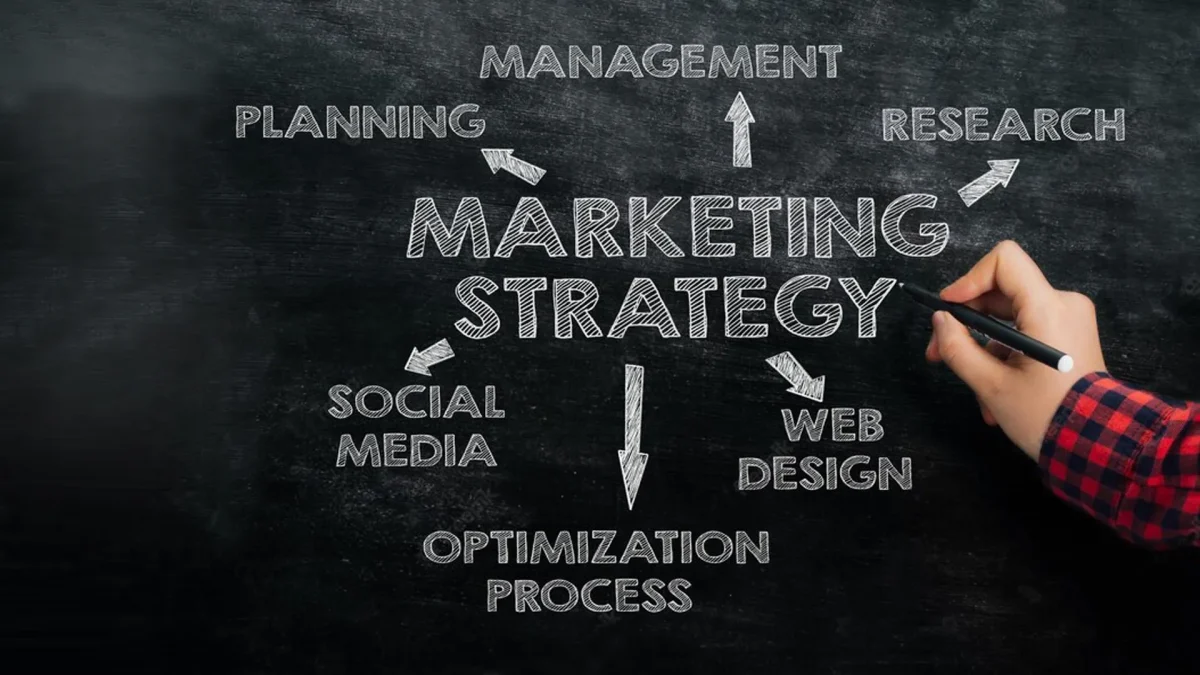
A fractional CMO provides part-time executive marketing leadership without requiring a full-time hire. During a market shift, this leader can help a business reassess customer needs, clarify its positioning, adjust priorities, and align marketing decisions with broader company goals.
The practical value comes from combining strategic direction with hands-on guidance. A fractional CMO can evaluate current performance, focus the team on the most important opportunities, guide implementation, and establish useful measures of progress. This article explains where that support can help, how the role differs from consulting, and what leaders should consider when selecting, integrating, and evaluating a fractional CMO.
Key Takeaways
- A fractional CMO is a part-time executive who helps set marketing direction and guide execution.
- During a market shift, the role can help leaders distinguish meaningful change from short-term noise.
- The engagement works best when the company has clear business priorities, an accountable internal owner, and enough capacity to implement decisions.
- Success should be assessed with business outcomes, marketing indicators, implementation progress, and appropriate context.
- A fractional CMO is not automatically the right answer. Some companies need a full-time leader, a specialist, or stronger operational fundamentals instead.
What Is a Fractional CMO?
A fractional chief marketing officer is a senior marketing leader who works with a business on a part-time, interim, or defined-scope basis. The exact arrangement varies. Some engagements focus on a specific transition, while others provide continuing leadership for companies that need executive direction but not a full-time CMO.
The role can include evaluating the market, defining positioning, setting marketing priorities, coordinating teams and partners, reviewing budgets, guiding campaigns, and reporting to the CEO or leadership team. The scope should be explicit because the title alone does not establish what the person will own.
How the Role Differs From a Consultant
A consultant commonly studies a problem and recommends a course of action. A fractional CMO may do that analysis but usually accepts more responsibility for decisions, coordination, and implementation. The fractional leader might establish the marketing plan, assign owners, review work, resolve tradeoffs, and keep activity connected to business objectives.
That distinction is not universal. Some fractional CMOs primarily advise, while some consultants remain closely involved in execution. Before hiring either one, define decision rights, deliverables, meeting responsibilities, team oversight, and the work that will remain with internal employees or outside partners.
How the Role Differs From a Full-Time CMO
A full-time CMO is continuously available and typically assumes broad responsibility for the marketing function. A fractional CMO provides fewer hours or a narrower scope. That can give a growing business access to executive leadership without immediately creating a permanent executive position.
The tradeoff is capacity. A fractional leader cannot attend every meeting, manage every task, or replace an understaffed department. The company still needs people who can execute the plan, supply accurate information, and make timely decisions when the fractional CMO is not present.
What Counts as a Market Shift?
A market shift is a meaningful change in the conditions that influence customer decisions or business performance. It can be caused by changing buyer priorities, new competitors, economic pressure, regulation, technology, distribution changes, or declining effectiveness in an established channel.
Not every disappointing week or competitor announcement justifies a strategic pivot. Leaders should look for patterns across multiple sources, such as sales conversations, win-loss feedback, retention behavior, search demand, campaign performance, and customer research. The goal is to identify what changed, whom it affects, and whether the change is likely to influence the company’s core assumptions.
Regulatory and privacy developments deserve particular care. A marketing leader can help identify operational implications, but questions about legal obligations should be reviewed by qualified legal or compliance professionals.
Six Ways a Fractional CMO Can Help During a Market Shift
1. Diagnose What Actually Changed
The first task is to replace assumptions with a clear problem statement. A fractional CMO can bring together information that often lives in separate departments: sales objections, customer support themes, campaign results, pipeline movement, churn reasons, and competitor activity.
The resulting diagnosis should answer practical questions. Has the target customer’s problem changed? Is demand weakening, or is the company reaching the wrong audience? Are leads declining, or is conversion the real constraint? Has the offer become less compelling, or is the sales team communicating it inconsistently?
This work prevents an expensive response to the wrong problem. It also gives the leadership team a shared view of the evidence, remaining uncertainties, and decisions that cannot wait.
2. Revisit the Ideal Customer and Positioning
When buyer priorities change, familiar messaging can lose relevance. A fractional CMO can help review which customer groups still have an urgent need, sufficient authority, and a strong reason to choose the company’s approach.
This does not always require a complete rebrand. The appropriate response might be a more precise audience, a clearer value proposition, stronger evidence, a revised offer, or a better explanation of the cost of inaction. The leader can also help keep changes consistent across the website, campaigns, sales materials, and customer conversations.
Positioning decisions should be grounded in customer evidence rather than internal preference. Interviews, sales call reviews, customer language, and win-loss analysis can reveal what buyers value and where the current message creates confusion.
3. Reset Priorities and Resource Allocation
Market shifts often produce a long list of proposed responses. Teams may want to launch new campaigns, add channels, adopt tools, revise the website, and pursue different audiences at the same time. A fractional CMO can help rank those options by strategic importance, expected value, effort, risk, and speed of learning.
A useful plan identifies what to continue, stop, test, and postpone. It should connect each priority to a business objective and name the person responsible for implementation. Budget changes should follow that logic instead of reacting to the loudest request or newest tactic.
This is also the point to expose capacity constraints. If the company cannot support the proposed work with people, data, technology, or sales follow-up, leadership must reduce the scope or supply the missing resources.
4. Align Marketing, Sales, and Leadership
A sound strategy can still fail when teams interpret it differently. Marketing may optimize for lead volume while sales needs better-qualified opportunities. Leadership may expect rapid revenue while the chosen initiative requires a longer buying process. A fractional CMO can make these assumptions visible and establish shared definitions.
Alignment should cover the target customer, offer, qualification criteria, funnel stages, handoff process, follow-up expectations, and reporting method. Regular operating reviews can then focus on decisions and obstacles instead of competing versions of the data.
The fractional CMO should not become the sole bridge between departments. The stronger outcome is a repeatable communication process that internal leaders can continue using.
5. Guide Focused Experiments
Uncertain conditions call for learning, but uncontrolled experimentation can waste time and obscure results. A fractional CMO can convert strategic questions into limited tests with a defined audience, hypothesis, owner, budget, measurement method, and decision date.
For example, a company might test a revised message with one customer segment before changing every campaign. It might validate demand through customer conversations and a focused offer before building a larger program. These are planning examples, not promises of a particular result.
Each test should produce a decision: expand it, revise it, stop it, or gather more evidence. Running many disconnected activities without decision rules creates motion but not useful learning.
6. Build a Practical Measurement System
During a shift, teams need enough measurement to make decisions without treating every metric as equally important. A fractional CMO can create a reporting structure that links marketing activity to pipeline, customers, revenue, and profit where the available data permits.
Leading indicators such as qualified inquiries, conversion rates, sales conversations, and campaign response can help teams detect movement before final revenue is available. Financial outcomes remain important, but attribution should be handled carefully when multiple channels, sales activity, seasonality, and market conditions influence a purchase.
Reporting should explain what happened, why it may have happened, what remains uncertain, and what the team will do next. A dashboard without interpretation is not an executive decision system.
When a Fractional CMO May Be the Right Fit
A fractional CMO may be appropriate when a company needs senior marketing direction but does not need or cannot yet support a full-time executive role. Common situations include a leadership gap, a strategic repositioning, a new offer, inconsistent marketing and sales coordination, or a growth plan that has outpaced the existing management structure.
The model is more likely to work when the CEO is prepared to share context and decision-making access, the internal team can implement priorities, and the company can define the business problem it wants the leader to address.
When Another Type of Support May Be Better
A fractional CMO may not be the best solution when the need is primarily tactical, such as producing content, managing advertisements, or configuring a specific system. A specialist, agency, contractor, or employee may fit that scope better.
A full-time leader may be more appropriate when the organization needs continuous executive availability, extensive people management, or broad ownership of a large marketing function. If the company has not established a viable offer or lacks basic delivery capacity, it may need foundational business work before adding marketing leadership.
How to Select a Fractional CMO
Start with the business challenge, not the title. Write down the decisions the leader will own, the outcomes the company wants to influence, the people involved, and the limits of the engagement. Then evaluate candidates against that scope.
- Relevant problem experience: Look for experience with the type of challenge you face, not just a familiar industry label.
- Strategic judgment: Ask how the candidate diagnoses problems, evaluates evidence, and makes tradeoffs.
- Implementation approach: Clarify how recommendations become assigned work and how obstacles are handled.
- Communication style: Determine whether the candidate can work effectively with the CEO, sales leaders, marketers, and outside partners.
- Capacity and availability: Confirm expected hours, response times, meeting cadence, and competing commitments.
- Scope clarity: Document deliverables, decision rights, exclusions, fees, confidentiality expectations, and termination terms.
Ask candidates to explain how they would approach the first phase of the engagement. A credible answer should include discovery, evidence gathering, stakeholder input, prioritization, and a process for validating assumptions. Be cautious when someone promises a specific outcome before reviewing the business.
How to Integrate a Fractional CMO
Good integration begins before the first strategy meeting. Give the fractional CMO access to the information needed to understand the business, including current plans, customer research, financial constraints, campaign history, pipeline definitions, reporting, team responsibilities, and relevant vendor relationships.
Introduce the leader’s role to employees and partners. Explain what the person owns, what remains unchanged, who approves major decisions, and how team members should raise concerns. Without this clarity, employees may view the fractional CMO as an outside reviewer instead of an accountable leader.
Establish an operating cadence that fits the engagement. This may include a leadership review, a working session with the marketing team, and a written update covering performance, decisions, risks, and next actions. The exact schedule should reflect the pace of the business rather than follow a generic template.
How to Measure the Engagement
Agree on a small set of measures at the beginning, including baseline values when reliable data exists. Choose indicators based on the company’s objectives and buying process rather than copying a standard dashboard.
| Measurement Area | Possible Indicators | Question to Answer |
|---|---|---|
| Business outcomes | Revenue, profit contribution, retention, customer acquisition | Is marketing contributing to the result the company needs? |
| Pipeline health | Qualified opportunities, stage conversion, sales cycle movement | Is demand turning into credible sales activity? |
| Marketing performance | Qualified inquiries, conversion rates, cost per relevant result | Are priority programs becoming more effective? |
| Execution | Milestones completed, tests concluded, obstacles resolved | Is the strategy becoming implemented work? |
| Organizational progress | Clear ownership, reporting consistency, marketing and sales alignment | Is the company building a stronger marketing function? |
No single metric proves the value of a fractional CMO. Review financial outcomes alongside leading indicators, execution progress, outside conditions, and the strength of the available attribution. Some valuable work, such as clarifying positioning or correcting a broken handoff, may affect results over time rather than immediately.
Common Engagement Problems to Avoid
- An undefined mandate: The leader is expected to fix marketing without authority, priorities, or a shared definition of the problem.
- No implementation capacity: The company approves a plan but has no one available to perform the work.
- Too many simultaneous priorities: Every department adds requests, preventing focused progress.
- Limited access to leadership: Important decisions stall because the fractional CMO cannot obtain context or approval.
- Activity-based reporting: Meetings focus on completed tasks without explaining business impact or the next decision.
- Unrealistic timing: Leaders expect immediate revenue from changes that require research, implementation, sales follow-up, or a longer buying cycle.
A Practical Decision Checklist
Before starting an engagement, leadership should be able to answer these questions:
- What market change or business problem are we trying to address?
- Which decisions will the fractional CMO own or influence?
- Who will implement the plan?
- What information and systems will the leader need to access?
- How will marketing, sales, and leadership resolve disagreements?
- Which measures will indicate progress, and what are their limitations?
- What conditions would justify expanding, changing, or ending the engagement?
If these questions cannot yet be answered, use the initial phase to define them. Clear expectations make it easier for both the company and the fractional CMO to evaluate the relationship honestly.
Conclusion
A market shift creates pressure to act, but speed without diagnosis can compound the problem. A fractional CMO can help leaders interpret evidence, refine positioning, establish priorities, coordinate execution, and measure whether the response is working.
The title is not a substitute for fit. The engagement requires a defined mandate, access to decision-makers, realistic resources, and an internal team capable of carrying the work forward. When those conditions are present, fractional leadership can provide a practical bridge between strategic marketing advice and full-time executive ownership.
Frequently Asked Questions
What is a fractional CMO?
A fractional CMO is a senior marketing leader who serves a business on a part-time, interim, or defined-scope basis. Responsibilities can include strategy, positioning, budgeting, team leadership, implementation guidance, and performance review.
How can a fractional CMO help during a market shift?
A fractional CMO can assess what changed, identify the customers and priorities most affected, revise marketing direction, align teams, guide focused tests, and establish measures for evaluating the response.
Can a fractional CMO work with an existing marketing team?
Yes. The fractional CMO can set priorities, clarify roles, coach team members, coordinate outside partners, and guide execution. The company should explain the leader’s authority and responsibilities during onboarding.
Is a fractional CMO cost-effective for a small business?
It can be when the company needs senior marketing leadership but does not require a full-time executive. Value depends on the scope, fees, implementation resources, business needs, and results. A tactical specialist may be more appropriate when executive leadership is not the primary need.
How quickly should a fractional CMO produce results?
A fractional CMO may identify priorities and initiate changes early, but measurable results depend on the starting conditions, implementation capacity, goals, market, and sales cycle. Agree on initial milestones as well as longer-term business measures.
How should a company measure a fractional CMO’s performance?
Use measures connected to the engagement’s objectives. These may include business outcomes, pipeline health, marketing performance, implementation milestones, and organizational improvements. Review attribution limits and relevant business context before drawing conclusions.